
WHAT IS AN FFU (FAN FILTER UNIT)? THE COMPLETE GUIDE TO CLEAN RO
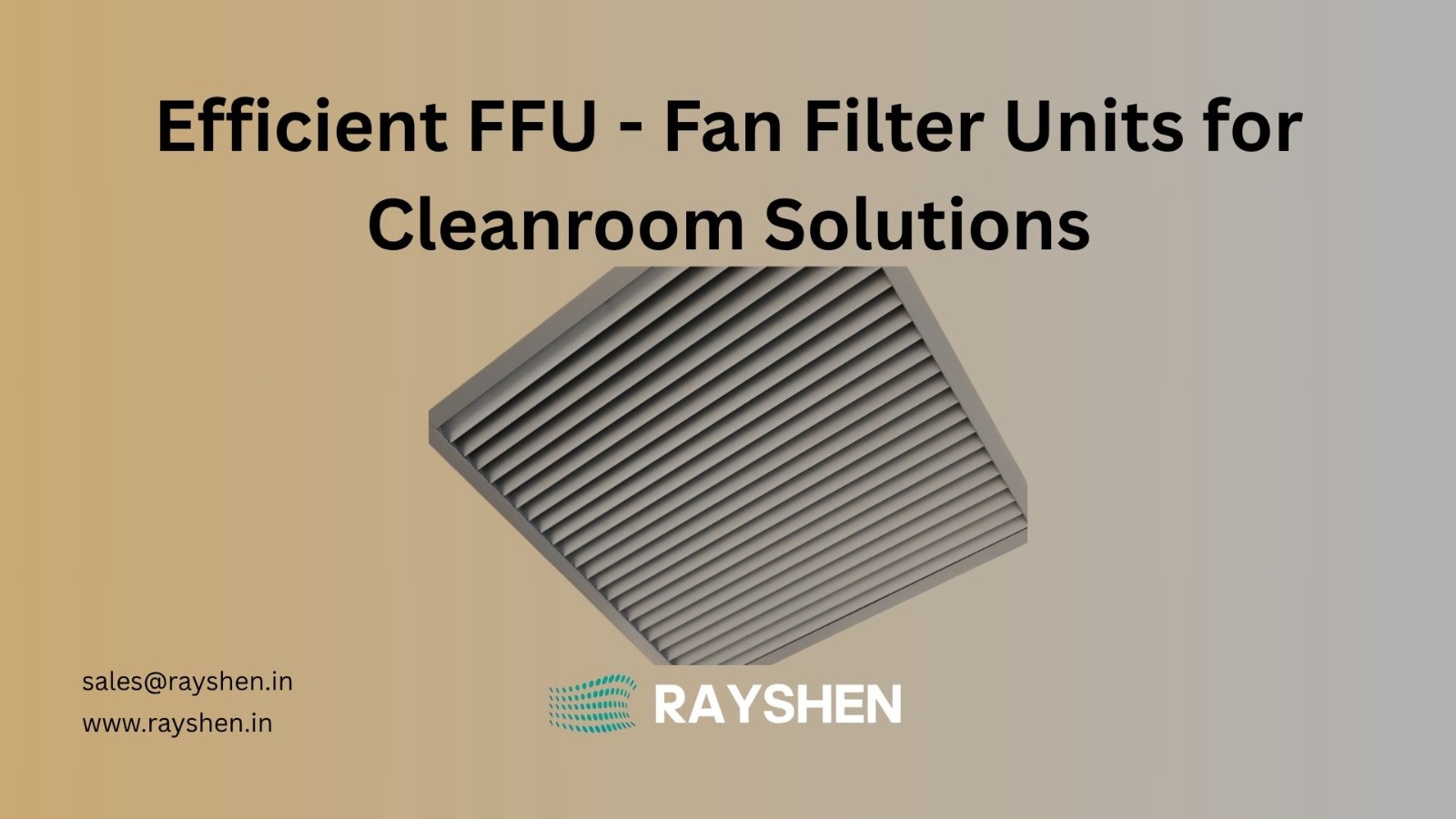
In industries where air quality and contamination control are critical, the FFU (Fan Filter Unit) stands as one of the most essential components of a clean room. From semiconductor manufacturing to pharmaceutical production, FFUs help maintain ultra-clean environments where precision and purity are non-negotiable.
At Rayshen, we specialize in designing and manufacturing high-performance FFU systems that meet the most demanding clean room standards. In this guide, we’ll break down what an FFU is, how it works, and why it’s the backbone of modern clean room air filtration.
What Is an FFU (Fan Filter Unit)?
An FFU, or Fan Filter Unit, is a self-contained air filtration module that combines a fan and a HEPA or ULPA filter in a single housing. Its primary function is to supply purified air to clean rooms by removing airborne contaminants such as dust, microbes, and chemical particles.
Unlike traditional centralized air systems, FFUs are modular units that can be installed in the ceiling grid of a clean room or controlled environment. Each unit operates independently, pulling air from the plenum above, filtering it through a HEPA filter, and pushing clean air down in a laminar flow pattern across the workspace.
At Rayshen, our FFUs are engineered for consistent airflow, quiet operation, and long-term durability, ensuring stable clean room performance and compliance with ISO standards.
How Does an FFU Work?
An FFU operates as a localized air purification system. Here’s a simple breakdown of the process:
- Air Intake: The fan motor draws in ambient air from the plenum or return air system above the clean room ceiling.
- Filtration: The air passes through a pre-filter (for large particles) and then a HEPA or ULPA filter, which removes up to 99.99% of contaminants as small as 0.3 microns.
- Clean Air Delivery: The purified air is distributed evenly into the clean room in a laminar (unidirectional) flow, minimizing turbulence and preventing particle buildup.
Because each FFU has its own fan, it doesn’t rely on ducted systems, allowing for flexible clean room design, modular scalability, and efficient airflow control.
Key Components of an FFU
A typical FFU consists of four main parts — each playing a crucial role in achieving clean, consistent airflow:
- Fan and Motor: Drives air through the filter at controlled speeds, maintaining stable air velocity.
- Pre-Filter: Captures larger dust particles, extending the life of the HEPA/ULPA filter.
- HEPA or ULPA Filter: Removes microscopic contaminants from the air.
- Housing Unit: Encloses all components, usually made from aluminum or stainless steel for corrosion resistance and durability.
At Rayshen, our FFUs are built with precision-engineered housings and energy-efficient EC (Electronically Commutated) motors that deliver high performance while minimizing power consumption and noise.
Advantages of Using FFUs in Clean Rooms
Installing FFUs provides several operational and performance benefits compared to traditional HVAC-based filtration systems:
1. Modular and Scalable Design
FFUs can be added or removed as needed, making them ideal for modular clean room expansion. This flexibility allows facilities to adapt quickly to production changes without overhauling the entire ventilation system.
2. Energy Efficiency
Modern FFUs, like those from Rayshen, use energy-efficient EC motors that reduce power consumption while maintaining optimal airflow — leading to lower operating costs.
3. Uniform Airflow
The laminar flow design of FFUs ensures even distribution of clean air across the workspace, reducing turbulence and particle migration.
4. Easy Installation and Maintenance
Because each unit operates independently, maintenance can be performed on a single FFU without shutting down the entire clean room. Filter replacements and fan servicing are quick and straightforward.
5. Noise Reduction
Rayshen FFUs are engineered with low-vibration motors and acoustic insulation, ensuring quiet operation even in high-density installations.
Applications of FFUs Across Industries
FFUs are used in a wide range of industries that demand controlled air environments, including:
- Semiconductor and Microelectronics: Preventing dust contamination during chip fabrication.
- Pharmaceutical Manufacturing: Maintaining sterile conditions in production and packaging areas.
- Biotechnology Labs: Ensuring purity during sensitive research processes.
- Hospitals and Healthcare: Used in operating rooms, isolation wards, and ICU units.
- Food and Beverage Processing: Keeping production areas hygienic and free from contaminants.
At Rayshen, we customize our FFU solutions based on your specific industry requirements, ensuring compliance with ISO and GMP standards.
Rayshen FFUs: Designed for Performance and Reliability
What sets Rayshen FFUs apart is the attention to engineering detail and quality assurance. Every unit is tested for airflow performance, noise level, and particle retention before delivery.
Our FFU designs feature:
- High-efficiency EC fan motors for low energy use
- Integrated speed controllers for adjustable airflow
- Leak-proof construction for zero bypass
- HEPA/ULPA filtration options depending on your clean room class
- Optional digital control systems for smart monitoring and automation
With decades of expertise in clean room technology, Rayshen delivers solutions that ensure both air purity and operational efficiency.
Maintenance Tips for FFUs
To ensure optimal performance and long service life, here are a few maintenance best practices:
- Regular Filter Replacement: Replace HEPA filters as per the manufacturer’s schedule or when pressure drop increases.
- Monitor Airflow Speed: Periodically check airflow velocity to ensure consistent laminar flow.
- Clean Pre-Filters: Wash or replace pre-filters to prevent dust buildup.
- Test for Leaks: Perform periodic leak and integrity tests to maintain compliance.
- Inspect Electrical Components: Ensure fan motors and controllers are operating safely and efficiently.
By following these simple steps, you can maximize your FFU’s performance and maintain the integrity of your clean room environment.
Final Thoughts
An FFU (Fan Filter Unit) is far more than just an air filter — it’s the heart of your clean room’s air management system. By delivering controlled, particle-free airflow, it ensures that your operations remain safe, sterile, and compliant.
At Rayshen, we take pride in manufacturing advanced FFU systems that combine energy efficiency, precision airflow, and long-lasting reliability. Whether you’re building a new clean room or upgrading your existing setup, our Rayshen FFUs provide the clean air performance your facility deserves.