
ASTHALIN INHALER: USES, BENEFITS, DOSAGE, SIDE EFFECTS & PROPER
Asthma and other breathing conditions can make everyday activities difficult, especially during episodes of wheezing, coughing, chest tightness, or shortness of breath. A quick-relief inhaler plays an important role in helping open the airways during sudden breathing difficulties. Asthalin Inhaler is one such rescue inhaler that contains salbutamol, a medicine commonly prescribed by healthcare professionals to provide rapid relief from bronchospasm associated with asthma and certain other respiratory conditions.
This guide explains how the Asthalin Inhaler works, its common uses, dosage guidance, side effects, precautions, and tips for using it correctly. Always use this medicine only as directed by your healthcare provider.
What is Asthalin Inhaler?
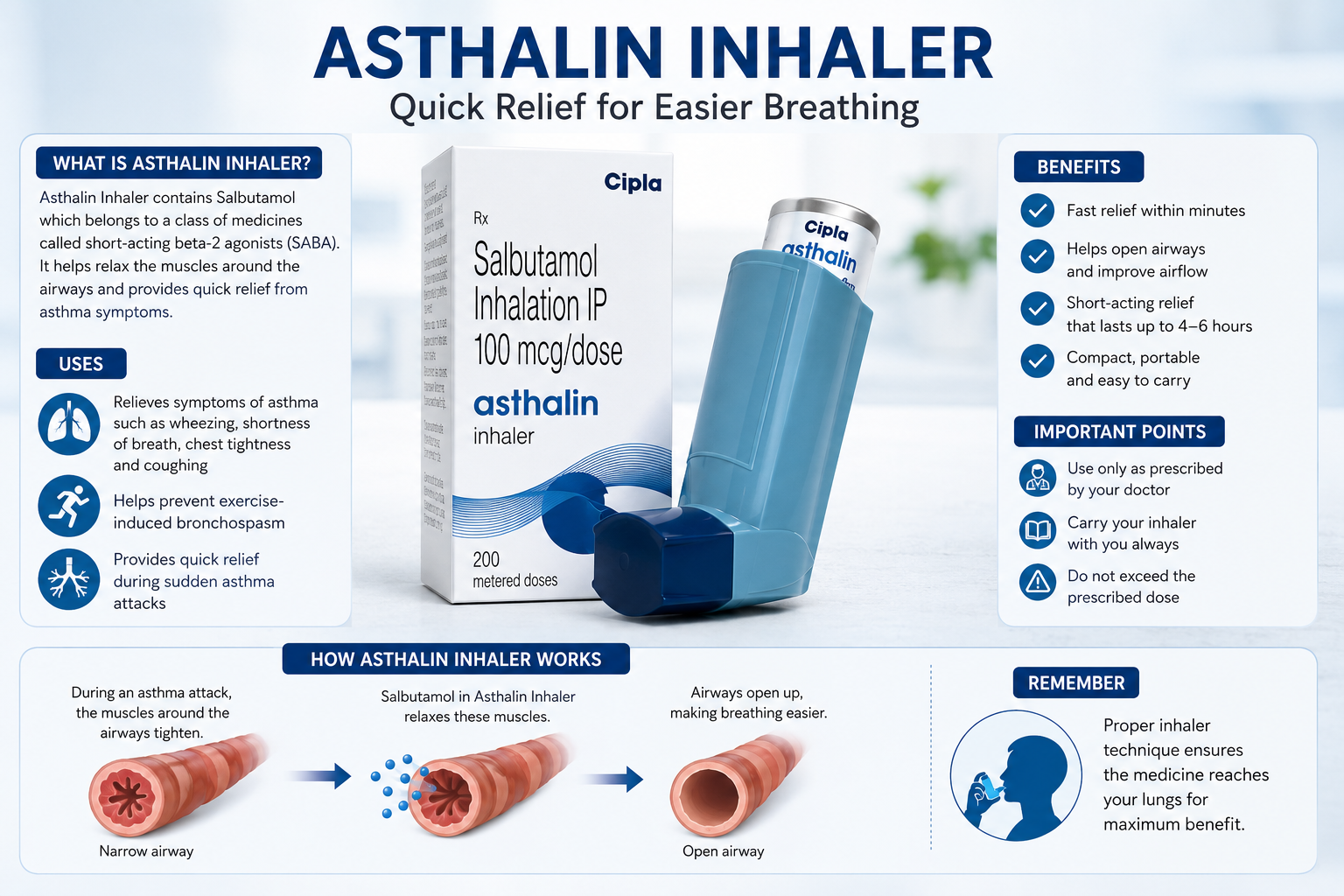
Asthalin Inhaler is a prescription medicine that contains Salbutamol (also known as Albuterol in some countries). It belongs to a class of medicines called short-acting beta-2 agonists (SABA). These medicines work by relaxing the muscles surrounding the airways, allowing the air passages to widen and making breathing easier.
Because of its fast action, it is often referred to as a rescue inhaler or reliever inhaler, meaning it is used to quickly relieve sudden asthma symptoms rather than to prevent them over the long term.
What is Asthalin Spray?
Many people refer to the inhaler as Asthalin Spray because it delivers a fine aerosol spray containing the medicine into the lungs. Although the terms "Asthalin Spray" and "Asthalin Inhaler" are commonly used interchangeably, the product is a metered-dose inhaler designed to deliver a measured amount of medication with each puff.
How Does Asthalin Inhaler Work?
The active ingredient, salbutamol, stimulates beta-2 receptors present in the airway muscles. This action helps:
- Relax the muscles around the bronchial tubes.
- Open narrowed airways.
- Improve airflow to the lungs.
- Reduce wheezing and breathlessness.
- Provide rapid relief during an asthma attack.
Most people begin to experience relief within a few minutes, and the effects generally last for 4 to 6 hours.
Asthalin Inhaler for Asthma
One of the most common uses of Asthalin Inhaler for Asthma is to provide quick relief from symptoms such as:
- Wheezing
- Shortness of breath
- Chest tightness
- Persistent coughing
- Difficulty breathing
It is important to remember that this inhaler does not replace long-term asthma control medicines such as inhaled corticosteroids. If you need your rescue inhaler frequently, consult your healthcare provider, as your asthma management plan may need adjustment.
Who May Be Prescribed Asthalin Inhaler?
A doctor may prescribe Asthalin Inhaler for individuals experiencing bronchospasm due to:
- Asthma
- Exercise-induced bronchospasm
- Chronic Obstructive Pulmonary Disease (COPD)
- Other reversible airway conditions
Always use the inhaler only for the condition and dosage recommended by your healthcare professional.
Benefits of Asthalin Inhaler
Some of the commonly recognized benefits include:
- Rapid relief from sudden breathing difficulty.
- Helps reduce wheezing and chest tightness.
- Opens narrowed airways quickly.
- Convenient metered-dose inhaler format.
- Portable and easy to carry.
- Can help improve breathing during physical activity if prescribed for exercise-induced bronchospasm.
Recommended Dosage
The dosage depends on the patient's age, medical condition, and healthcare provider's advice.
General guidance often includes:
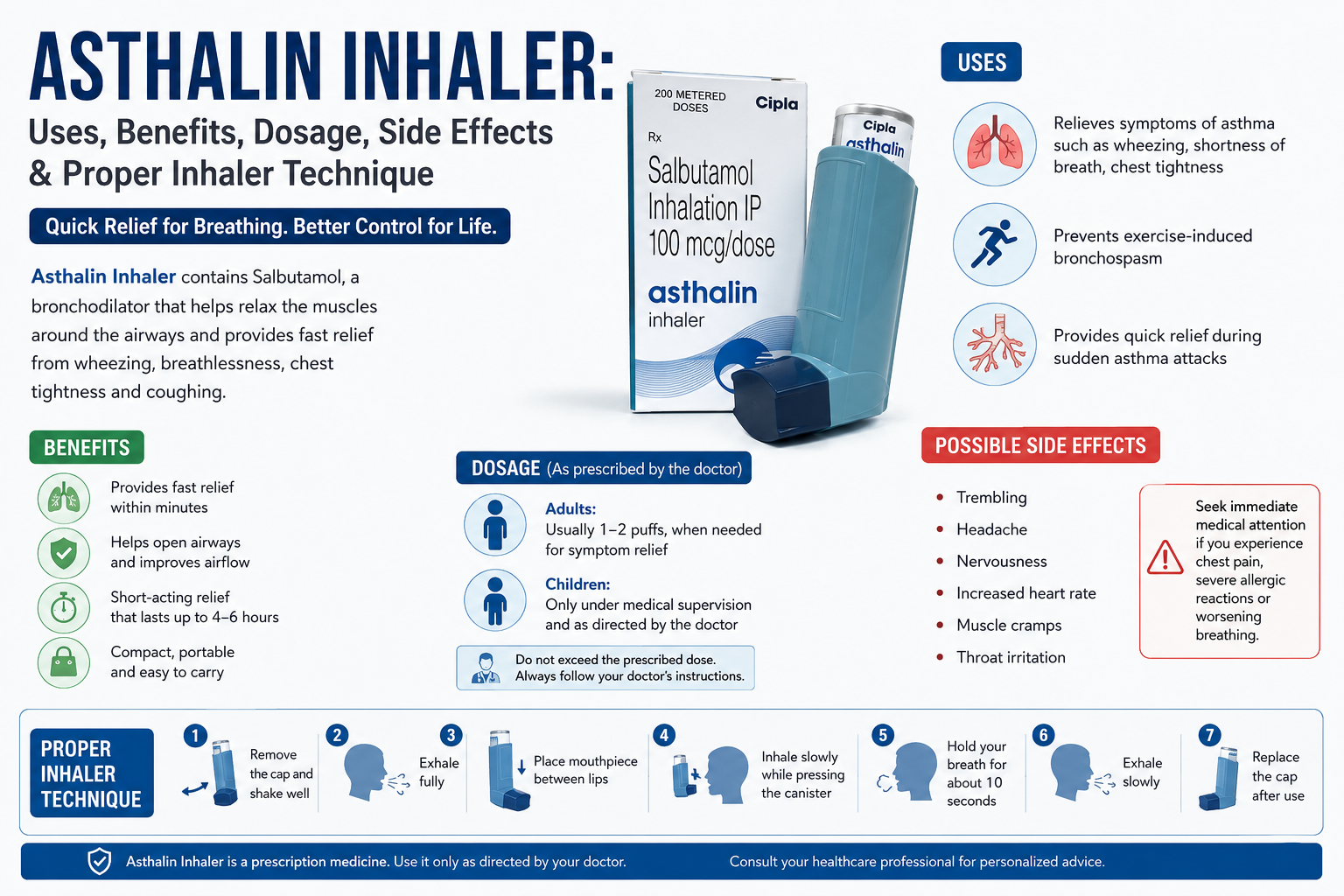
- Adults: Usually 1–2 puffs when needed for symptom relief.
- Children: Only under medical supervision and according to the prescribed dose.
Do not exceed the prescribed number of puffs without consulting your healthcare provider.
How to Use Asthalin Inhaler Correctly
Proper inhaler technique helps ensure the medicine reaches your lungs effectively.
Step-by-step Instructions
- Remove the protective cap.
- Shake the inhaler well.
- Exhale fully.
- Place the mouthpiece between your lips.
- Begin inhaling slowly while pressing the canister once.
- Continue inhaling deeply.
- Hold your breath for about 10 seconds.
- Exhale slowly.
- If another puff is prescribed, wait approximately 30–60 seconds before repeating.
If you have difficulty coordinating inhalation with pressing the inhaler, your doctor may recommend using a spacer device.
Common Side Effects
Like many medicines, Asthalin Inhaler may cause side effects in some people.
Possible side effects include:
- Mild trembling
- Headache
- Nervousness
- Increased heart rate
- Muscle cramps
- Throat irritation
These effects are usually temporary.
Seek medical attention immediately if you experience:
- Severe allergic reactions
- Chest pain
- Difficulty breathing that worsens after using the inhaler
- Irregular heartbeat
Precautions Before Use
Tell your healthcare provider if you have:
- Heart disease
- High blood pressure
- Thyroid disorders
- Diabetes
- Seizure disorders
- Low potassium levels
Also inform your doctor about all medicines you are taking, including over-the-counter medicines and supplements.
Drug Interactions
Certain medicines may interact with salbutamol, including:
- Beta-blockers
- Diuretics
- Digoxin
- Some antidepressants
- Other bronchodilators
Always consult your healthcare provider before combining medicines.
Can Asthalin Inhaler Be Used During Pregnancy or Breastfeeding?
Use during pregnancy or breastfeeding should only occur when prescribed by a qualified healthcare professional after evaluating the benefits and potential risks.
Do not self-medicate during pregnancy.
Storage Instructions
Store the inhaler:
- At room temperature.
- Away from direct sunlight.
- Away from excessive heat.
- Do not puncture or burn the canister.
- Keep out of reach of children.
When Should You Consult a Doctor?
Contact your healthcare provider if:
- Your asthma symptoms become more frequent.
- You require the inhaler more often than prescribed.
- Your breathing worsens.
- The inhaler does not provide expected relief.
- You notice unusual side effects.
Frequent use of a rescue inhaler may indicate poor asthma control.
Lifestyle Tips for Better Asthma Management
Along with prescribed medicines, consider:
- Avoiding known allergy triggers.
- Following your asthma action plan.
- Using controller medicines regularly if prescribed.
- Staying physically active within your healthcare provider's recommendations.
- Avoiding smoking and second-hand smoke.
- Keeping vaccinations up to date where appropriate.
Frequently Asked Questions
Is Asthalin Inhaler used for emergency relief?
Yes. Asthalin Inhaler is generally prescribed as a rescue inhaler to help relieve sudden asthma symptoms or bronchospasm.
How quickly does Asthalin Inhaler work?
Many people begin experiencing relief within a few minutes after using the inhaler.
Can I use Asthalin Spray every day?
Use it only as prescribed. Frequent need for the inhaler may indicate that your asthma is not well controlled and requires medical review.
What should I do if I miss a dose?
Since rescue inhalers are generally used when symptoms occur, follow your healthcare provider's instructions. Do not take extra doses without medical advice.
Can children use Asthalin Inhaler?
Yes, but only under the supervision of a healthcare professional and according to the prescribed dosage.
Is Asthalin Inhaler the same as Asthalin Spray?
The terms are commonly used interchangeably. The medicine is delivered as a metered-dose inhaler that sprays a measured dose of salbutamol.
Final Thoughts
Asthalin Inhaler is widely prescribed for the rapid relief of bronchospasm associated with asthma and certain other respiratory conditions. When used correctly and according to medical advice, it can help relieve wheezing, coughing, chest tightness, and shortness of breath within minutes.
However, it should not replace long-term asthma control medicines if those have been prescribed. Regular follow-up with your healthcare provider, proper inhaler technique, and adherence to your asthma management plan are essential for maintaining better respiratory health.
Disclaimer: This article is for educational purposes only and should not be considered medical advice. Always consult a qualified healthcare professional regarding diagnosis, treatment, and the appropriate use of prescription medicines.